

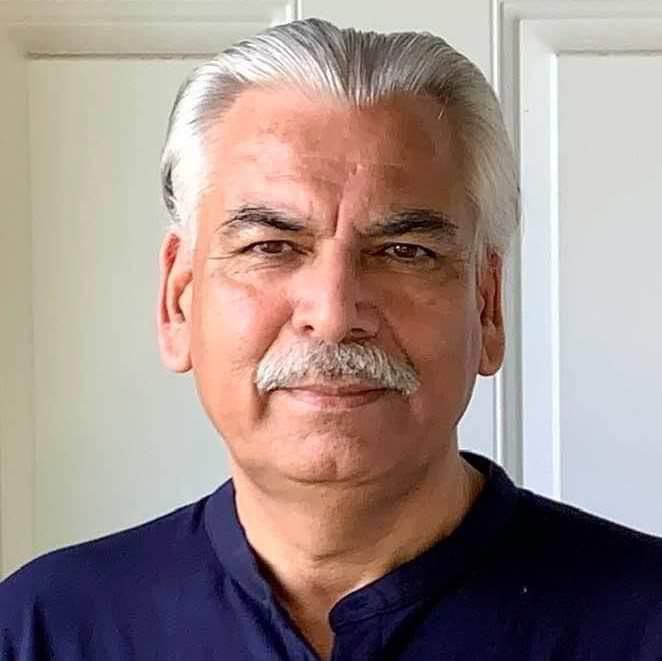
Barrister Usman Ali
Pakistan today stands at a dangerous crossroads where state authority has eroded, and daily life for citizens has become hostage to chaos. Any group can take to the streets at will, block major roads, and wield sticks, stones, petrol bombs and even firearms , attacking public and private property and clashing with law enforcement. Ordinary people, not protesters, pay the price: ambulances are stopped, hospitals become inaccessible, businesses shut down, schools close, and the state watches helplessly. This cycle has played out for years, each time buried under some political “understanding.”
The bitter truth is that when protests target a sitting government, those in power often look away for political expediency. A few cases are registered, some statements made, and the issue fades. When the same groups come to power, they withdraw the cases against themselves. The result is an endless loop of mob politics in which the law weakens while powerful groups grow stronger. The state’s authority is hollowed out each time.
The situation turns more volatile when religious groups enter the scene. They claim moral supremacy, disregard the law entirely, and block roads wherever they wish. Transport grinds to a halt, businesses are paralyzed, and a climate of fear spreads. These groups openly resort to violence , even killing law enforcement officers , while the state issues loud condemnations that soon melt into deals and appeasement. Such weak responses embolden extremism, reinforcing the perception that these groups are above the law. Before long, they return to the streets and repeat the cycle.
Many countries have faced similar challenges and solved them without suppressing the right to protest. In the United Kingdom, demonstrations near hospitals, schools, and major highways are strictly prohibited, with immediate police action. In France, no protest is allowed without prior authorization. Singapore, Tunisia, China, the Gulf states, Germany, and Canada all enforce clear legal frameworks that protect public life while preserving free expression. None of these nations allow mobs to paralyze entire cities.
Freedom of expression is fundamental, but every right has limits. No society allows a handful of people to trample the freedoms of millions. Even in mature democracies, protest is regulated through designated spaces and clear rules. Pakistan must adopt a similar approach to turn protest from a weapon of disruption into a legitimate democratic process.
At the same time, the state must respect lawful, peaceful protest. Its duty is to maintain public order , not to suppress dissent.
Another alarming dimension is the rise of so-called “citizen journalists” and YouTubers who flood protest sites with live streams, half-truths, and sensational rumors , all for clicks and views. Their propaganda fuels panic and often incites violence. This has effectively become a new form of informational terrorism, yet the state has done little to confront it.
Around the world, governments have acted decisively against such disinformation. Russia has imposed prison sentences of up to 15 years for spreading false information against the state. Singapore allows the government to order the removal or correction of false statements. Tunisia has criminalized such content with harsh penalties, including , in extreme cases, the death penalty. China removes hostile content instantly, while Germany and Canada hold platforms accountable through strict regulations and heavy fines.
It’s time for Pakistan to act with similar clarity. Legislation must ban protests near critical infrastructure ,hospitals, schools, airports, highways, and capital cities. Demonstrations should be allowed only in designated areas with prior approval and time limits. Violations should bring strict penalties, and any damage to public property must be recovered from the responsible groups. Violence or resistance against law enforcement should be treated as terrorism. The message must be unambiguous: the state will not be held hostage.
Restoring state authority will take more than statements. The era of political compromises and weak enforcement is over. If the rule of law is not re-established on the streets, the streets will rule the law. Citizens, too, must stop blindly following political and religious slogans. They need to recognize the agendas behind these mobs and reject those who undermine collective security and stability.
Political parties and religious groups must also change course. The right to protest cannot outweigh another citizen’s right to live freely and safely. Blocking roads in opposition and erasing cases in power is hypocrisy, and poison for state legitimacy. The law must apply equally to all.
The decisive moment is here. If the state hesitates again, the streets will no longer belong to the people , they will belong to the mobs. In many places, they already do. Container-wielding groups disrupt entire cities with impunity. Pakistan urgently needs a legal framework that safeguards free expression while protecting public order and state authority. Protest is a pillar of democracy , but when it strips others of their freedoms, it stops being democracy and becomes chaos.
To reassert state authority, statements alone won’t cut it anymore , this moment calls for firm, decisive action. The time for political compromises and hesitation has passed. If the rule of law doesn’t take hold on the streets, the streets themselves will overpower it. The responsibility now lies squarely with the state.
At the same time, citizens, too, must stop chasing religious or political slogans in blind faith. They must think critically, recognize the motives behind such forces, and have the courage to reject and resist them.
Leave a Reply