

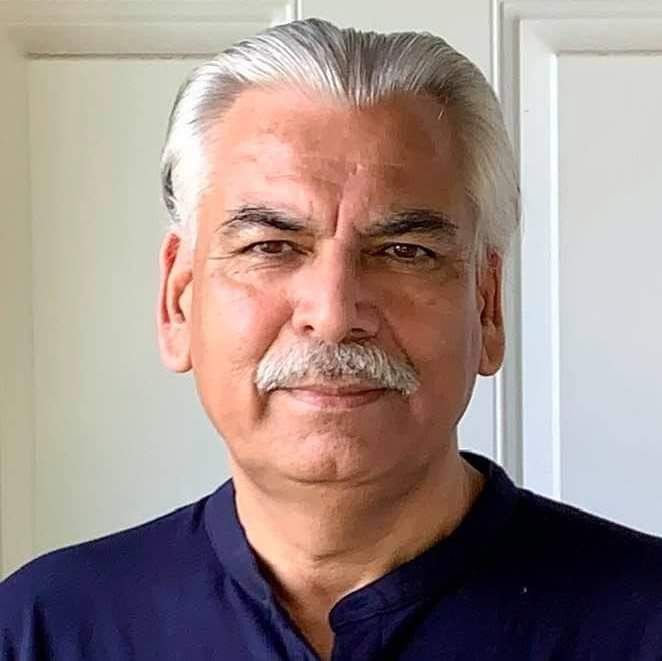
Barrister Usman Ali, Ph.D.
In any democracy, a constitution serves as the nation’s compass , a covenant that restrains rulers, safeguards citizens’ rights, and balances the branches of the state. In Pakistan, however, it has repeatedly become a battlefield where governments, politicians, and judges twist its meaning to suit their interests. The current constitutional dispute is not new; it is part of a long continuum. Whether yesterday or today, it reflects not a legal debate alone but a deeper distortion of our political culture , where personal ambition outweighs collective national good.
Historically, every government in Pakistan , whether enjoying a full majority or surviving on shaky coalitions has seized any chance to amend the constitution. With few exceptions, most amendments have been driven not by reform but by expedience. Successive regimes reshaped the document to serve their immediate political needs, leaving a legacy of manipulation rather than maturity.
The present government appears to be walking the same well-trodden path. A series of new amendments is being pushed forward. The public, weary and detached, barely reacts, but the opposition has grown increasingly anxious. The government insists its efforts are “institutional reforms,” yet the opposition sees a blatant attempt to tilt the balance of power toward the executive. True reform would have demanded genuine consultation, transparency, and national consensus. What the country sees instead is haste, confusion, and politics disguised as principle.
But the blame does not rest solely with those in power. Had the opposition shown seriousness beyond slogans and press conferences , had it engaged the government constructively instead of scoring points , it might have prevented such unilateral tinkering in the first place. The refusal to build bridges has only deepened the divide.
Such behavior, on both sides, has turned constitutional reform into a source of instability. In an economy already fragile and gasping for stability, relentless political confrontation is a burden the state can ill afford. The constant urge to bend the constitution to personal will reinforces the public perception that Pakistan’s rulers obey no law but their own. Likewise, the opposition’s reactionary politics and short-sighted tactics have eroded public confidence in democracy itself. Nearly every major party in the country has, at some point, been accused of opportunism and too often, the accusation rings true.
Another critical dimension of Pakistan’s constitutional malaise lies within the judiciary. Once viewed as the pillar maintaining institutional balance, the higher judiciary has long carried the stigma of partisanship. History records how, time and again, it legitimized military takeovers and authoritarian adventures under the guise of “necessity.” The very body meant to defend the constitution often helped subvert it.
After Chief Justice Iftikhar Chaudhry’s era, this drift toward politicization intensified. Judges began to assume overtly political roles, their remarks and verdicts echoing the tone of party spokesmen rather than neutral arbiters. The uneven use of suo moto powers, extraordinary zeal in select political cases, and conspicuous silence in others deepened public doubt about judicial neutrality.
Under Chief Justices Saqib Nisar, Asif Saeed Khosa, and Umar Ata Bandial, the trend reached its peak. Judicial conduct increasingly aligned with political winds. Some rulings seemed to serve political narratives instead of legal reasoning. Judges appeared as participants in political campaigns , one leader hailed as “honest and righteous,” while rivals were humiliated and disqualified. These actions poisoned the judiciary’s credibility. Justice, in the eyes of many, began to depend not on law but on identity. When courts enter politics, justice itself exits the courtroom and the constitution becomes a pawn in the struggle for power.
Meanwhile, the opposition has proved equally destructive in its own way. The Pakistan Tehreek-e-Insaf, once the self-proclaimed party of reform and accountability, has become a symbol of obstinacy and chaos. During its tenure, lacking the numbers to amend the constitution, it nonetheless repeatedly voiced ambitions to replace the parliamentary system with a presidential one and to roll back the Eighteenth Amendment. While that opportunity never arrived, its government used fast-track legislation to silence dissent. Opposition leaders, journalists, and critics faced arrests and prosecution in the name of “rule of law.”
From its inception to its downfall, PTI’s political journey remained intertwined with the military establishment. Imran Khan’s record of praise for generals is still part of the public archive. Yet once those same institutions withdrew support, he turned against them, branding them enemies of democracy. Out of power, his tone grew more belligerent. PTI and other opposition forces following similar populist paths , now operate through protests and accusations rather than policy or parliamentary engagement. Imran Khan even ordered his lawmakers to resign from key committees, effectively abandoning legislative influence. This self-isolation damaged not only his party’s credibility but the broader democratic process itself.
Pakistan’s political crisis thus stems from a shared failure of accountability and restraint. The government is consumed by its obsession with control, the opposition by confrontation, and the judiciary by the illusion of moral guardianship. Together, they have shattered the institutional balance that keeps a democracy alive. Using the constitution as a weapon of revenge or convenience is nothing short of contempt for the state. The constitution’s purpose is not to distribute power but to discipline it. Each time it is molded to fit political desires, its sanctity weakens and public faith withers.
Pakistan no longer needs new amendments, slogans, or verdicts , it needs constitutional consciousness, transparency, and moral courage. The government must replace retaliation with dialogue. The opposition must return to parliament and practice responsible politics. And the judiciary must reclaim its neutrality, proving itself a symbol of justice rather than a participant in politics.
Power is fleeting; institutions endure. If these pillars continue to crumble under ego and expediency, future generations will inherit only chaos and mistrust. The lesson of Pakistan’s history is clear: whenever power triumphs over reason, the state itself begins to unravel. The time has come for all sides to treat the constitution not as an instrument of politics but as a national covenant , the only path leading this country from perpetual crisis toward stability, justice, and dignity.






Leave a Reply