

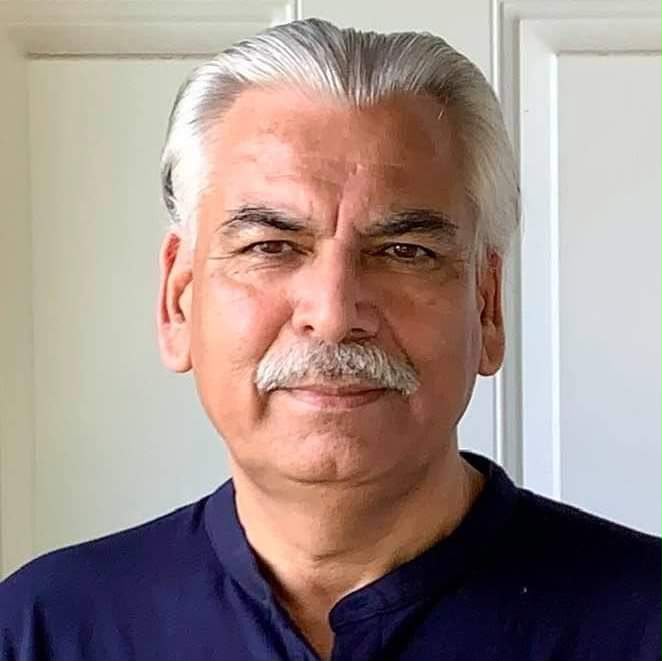
Barrister Usman Ali, Ph.D.
The Federal Constitutional Court’s decision to overturn the Supreme Court’s 2024 ruling in the Monal restaurant case has reopened a question far more important than the ownership of a single building: can Pakistan’s environmental laws survive when they conflict with the financial interests of influential businesses and powerful institutions?
The Supreme Court judgment, delivered by a bench headed by then Chief Justice Qazi Faez Isa, ordered the closure and demolition of Monal and other commercial establishments operating within the Margalla Hills National Park. The Federal Constitutional Court subsequently raised concerns about jurisdiction and procedural fairness, set aside the ruling, and directed the trial courts to determine the ownership disputes independently, while leaving administrative matters to the relevant regulatory authorities.
The first and most important question is whether the Federal Constitutional Court had jurisdiction to entertain the matter. A number of respected jurists have questioned whether it did. If the Constitution did not confer such jurisdiction, accepting its exercise would weaken the rule of law and undermine the constitutional provisions that define and limit judicial authority.
The Federal Constitutional Court’s “order”, the quotation marks are intentional, acknowledges that the Supreme Court had already decided the case and dismissed the review petitions. Ordinarily, that should have brought the litigation to an end. By proceeding further, the Court has created serious constitutional concerns about the limits of its own authority.
This jurisdictional issue is central to understanding the Monal case. Justice Qazi Faez Isa was right to place environmental protection above the private financial interests of an individual, business, or influential group.
The Margalla Hills National Park is not ordinary government property that may be opened to commercial development whenever an authority considers it convenient or profitable. It is a protected ecological area whose forests, wildlife, water systems, and biodiversity contribute directly to the environmental health of Islamabad. In a broader constitutional sense, it belongs not only to the present population but also to future generations.
The fundamental question was therefore not merely who owned the restaurant building or which public authority had granted a lease. It was whether a large commercial enterprise should ever have been permitted to operate within a legally protected national park.
The Supreme Court correctly recognized that environmental protection is inseparable from the constitutional rights to life and dignity. The right to life means more than physical survival. It includes access to clean air, safe water, and an environment capable of sustaining human health.
Environmental damage is rarely confined to the land on which it occurs. The destruction of forests and natural habitats affects air quality, water retention, wildlife, temperature, and the wider ecological balance. The public bears these losses, while the financial benefits of commercial development are usually enjoyed by a much smaller group.
This is precisely why environmental protection must prevail over private profit.
Monal was popular, commercially successful, closely associated with Islamabad’s tourism and social life, and a source of employment. However, these factors could not create a permanent entitlement to occupy protected land for commercial purposes. Popularity does not legalize an environmentally incompatible activity, and financial success cannot override the statutory purpose of a national park.
The case also exposes an uncomfortable reality: the more profitable and influential an enterprise becomes, the more difficult it may be for the state to enforce the law against it.
A small, unknown business operating unlawfully on public land would be unlikely to receive years of institutional accommodation, repeated litigation, and support from public bodies. A financially powerful enterprise, by contrast, can retain leading lawyers, challenge every procedural defect, and pursue its case through successive forums.
Influence does not always take the form of direct political or judicial interference. It may operate through access, resources, administrative relationships, and the ability to continue litigating until an unfavourable decision is reconsidered.
Even apart from the jurisdictional question, the outcome creates a troubling public perception that influential financial interests received greater protection than the environment. Whether or not that was the Court’s intention, the appearance itself matters because public confidence depends not only on judicial independence but also on the visible impartiality of judicial decisions.
That perception is reinforced by the role of the Capital Development Authority and the Metropolitan Corporation Islamabad. These public bodies succeeded in challenging a judgment intended to restore protected public land. The public is entitled to ask why government institutions appeared more determined to overturn the demolition order than to defend the ecological integrity of the Margalla Hills.
The case was diverted from an important environmental issue into disputes over ownership, jurisdiction, leases, and procedure. In the circumstances, those questions should not have displaced the broader constitutional issue.
Ownership and environmental legality are, in any event, separate matters. A person may establish ownership of a structure without acquiring the right to operate a restaurant within a protected national park. Property rights remain subject to environmental, zoning, and wildlife laws.
Even if one assumes, for the sake of argument, that the Federal Constitutional Court had jurisdiction, it should not have sacrificed the environmental protections secured by the earlier judgment. The Court could have returned any genuine ownership disputes to the trial courts while preserving the prohibition against commercial activity within the national park. It could also have required an independent environmental assessment before any decision was made about the future use of the site.
Instead, by setting aside the earlier ruling without clearly preserving its central environmental protections, the Court risks reducing a matter of ecological survival to an ordinary property dispute.
The observation that courts do not deliver “emotional judgments” must also be treated with caution. Environmental concern is not merely emotional. Protecting forests, water systems, wildlife, and biodiversity is a legal and constitutional responsibility. Judicial recognition of ecological damage should not be dismissed as sentiment, particularly when the consequences may affect millions of people.
Justice Qazi Faez Isa’s judgment was correct in its constitutional vision. It recognized that national parks cannot be sacrificed for private profit and that public authorities cannot indefinitely protect commercial interests at the expense of the environment.
The Monal case will now test whether Pakistan’s environmental laws possess real authority or whether they apply only until they inconvenience an influential enterprise.
Procedural fairness is essential, but procedure must not become a shield for financial privilege. When a conflict arises between the permanent ecological interests of the public and the temporary profits of an individual or group, the environment must come first.
Otherwise, the lesson will be deeply damaging: protected land remains protected only until those with sufficient money, access, and institutional support succeed in removing that protection.
More importantly, no court should conduct itself as though it stands above the Constitution. The judicial oath requires judges to discharge their duties honestly, faithfully, and to the best of their ability, in accordance with the Constitution and the law, while observing the judicial code of conduct.
The Federal Constitutional Court must therefore guard against becoming, or appearing to become, an instrument through which influential interests secure exceptional treatment. Such an appearance can be almost as damaging as the reality, particularly when public confidence in judicial institutions is already fragile.
Courts derive their legitimacy from the Constitution, not from their institutional power alone. A decision that appears to protect influence at the expense of constitutional limits and environmental law risks deepening public doubts about judicial independence and accountability.
The ultimate issue in the Monal case is therefore not the fate of one restaurant. It is whether constitutional authority, environmental protection, and the public interest can withstand the pressure of wealth, influence, and institutional power.














Leave a Reply