

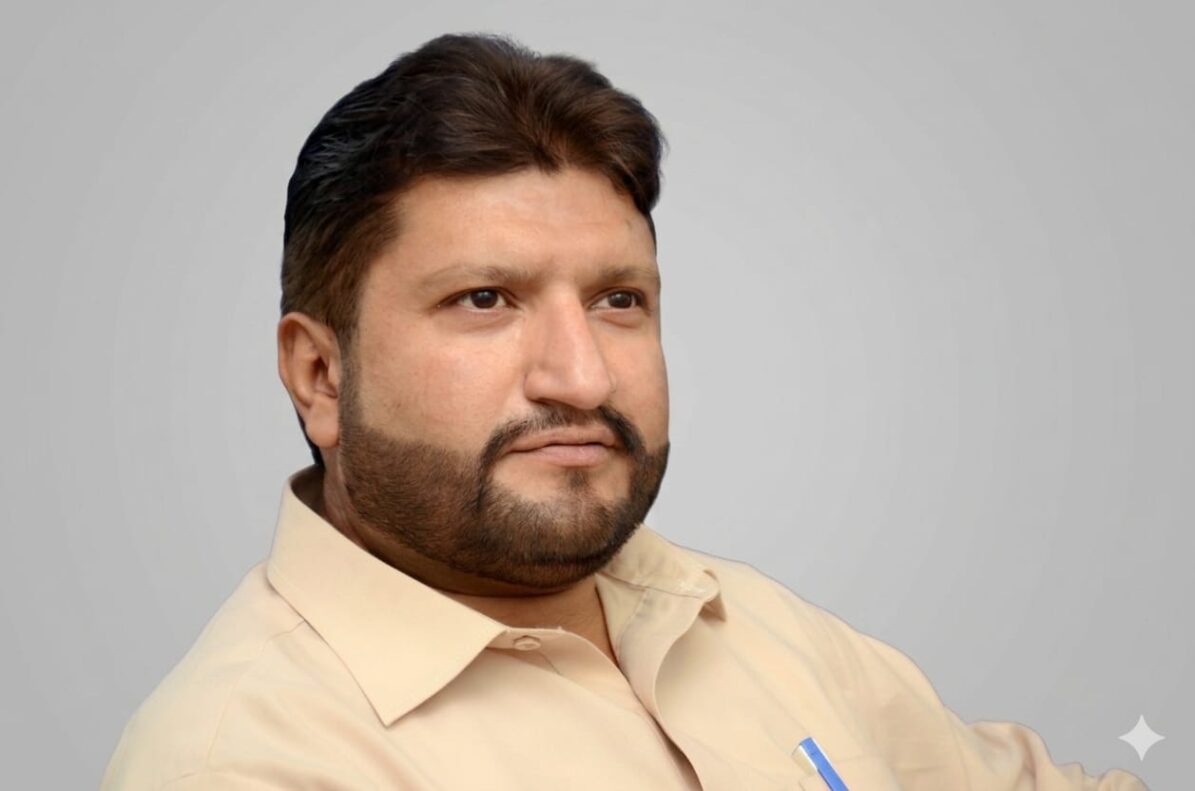
Amjad Hadi Yousafzai
History bears witness to the fact that states are not built on the support of individuals; they survive through the strength of their institutions. Where the law becomes smaller than personalities and national interest becomes secondary to power, democracy does not exist — instead, a marketplace of influence and power emerges. Unfortunately, Pakistan’s politics for years has presented a similar picture, where every few months the state is made hostage to the grievances of one political figure or another.
It appears as though this country is being governed not by the needs of the people but by the moods of politicians. Whether it is media debates from morning till evening or whispers in the corridors of power, the same questions dominate the conversation: How can Mahmood Khan Achakzai be persuaded? How can Maulana Fazlur Rehman be convinced? How can Nawaz Sharif be satisfied? How can Imran Ahmed Khan Niazi be brought back into the political mainstream? It seems as if the biggest challenges facing the state are not inflation, unemployment, terrorism, education, healthcare, or the economy, but rather the displeasure of a few individuals.
What kind of politics is this?
Did the people cast their votes so that they could constantly deal with the demands and grievances of political leaders? Has the role of the media become limited to pleading with political parties whenever a crisis emerges? Has the dignity of the state become so fragile that it trembles before the pressure of a few individuals?
In a democracy, disagreement is a right, protest is a constitutional right, and criticism is also a right — but holding the state hostage is no one’s right.
The unfortunate reality is that politics in our country has gradually transformed into political blackmail. When power is obtained, everything is declared constitutional; when power is lost, roads are blocked, institutions are questioned, the economy is held hostage, and threats are issued to push the state into crisis. Some speak of creating their own forces, some make statements about soldiers sacrificing their lives on the borders that hurt national sentiments, some accuse governments of bringing back thousands of Tehreek-e-Taliban Pakistan fighters, while others threaten to “destroy everything.” Then their supporters create the impression that if their demands are not accepted, the country’s system will become impossible to operate.
This approach is not democracy; it is a method of blackmailing the state.
The other side of this picture is equally disappointing. For decades, the military establishment has also played a direct or indirect role in politics, strengthening the perception that the path to power lies less through public votes and more through powerful centres of influence. At times, one leader was lifted onto shoulders, only to be brought down when circumstances changed. Then another was supported, and later distance was created from that very person as well. This cycle prevented politics from becoming stronger, stopped democracy from maturing, and kept public trust in institutions from being fully restored.
When politicians see that applying pressure opens doors, they make pressure their political strategy. As a result, after every crisis, the state becomes weaker while individuals become stronger.
The irony is that this same political elite lectures the public about sacrifice, simplicity, and patriotism, yet when it comes to distributing privileges, they all appear to stand together. Government protocol, countless benefits, special facilities for families, and now demands for lifetime blue passports — the question is: if these very people seek an identity for their children that allows them not to be recognised as Pakistanis around the world, then why do they continue giving ordinary citizens lessons about patriotism?
The state does not belong only to politicians; it is the trust of 240 million citizens. It cannot be left at the mercy of those who turn power into a bargaining tool. The media must also decide whether it will promote personality worship or support politics based on principles. The public must decide whether it will vote for slogans or for performance.
The time has come to change the rules of politics. The military establishment must adopt complete constitutional neutrality, political parties must abandon the practice of holding the state hostage for power, Parliament must become a truly decision-making institution, the law must be applied equally to everyone, and the people must be assured that Pakistan is not the property of any individual, family, or political party but an constitutional state.
It must be remembered that nations are built not through slogans but through character. Intimidation, threats, sit-ins, and blackmail are never signs of true leadership. A real leader is one who extinguishes fires rather than igniting them, resolves crises rather than creating them, and has the courage to sacrifice personal power for the strength of the state.
Pakistan does not need powerful personalities; it needs powerful institutions. Because when a state begins to tremble due to the displeasure of a few faces, it means politics has not merely weakened — the state itself has become fragile. And fragile states do not survive for long in the pages of history.

Leave a Reply