

Pakistan and Germany enjoy a relationship that may not always be described in emotional terms, but it is one of Pakistan’s most practical, serious and constructive partnerships. It is a relationship built on diplomacy, development cooperation, technical education, trade, democratic dialogue, academic exchange and people-to-people understanding. Unlike some relationships that are carried mainly by sentiment, Pak-German relations have been shaped by institutions, skills, knowledge and a shared belief that development must improve the lives of ordinary citizens.
Formal diplomatic relations between Pakistan and Germany were established in 1951, only a few years after Pakistan’s independence and Germany’s own post-war reconstruction. Pakistan was a new state trying to build its institutions, economy and international partnerships. Germany was rebuilding itself after the destruction of the Second World War and gradually emerging as one of Europe’s strongest democracies and economies. Though both countries had very different histories, the idea of rebuilding, reform and national development created space for mutual understanding.
Over the decades, Germany became one of Pakistan’s important partners in both development cooperation and trade. In 2024, bilateral trade was around €3.3 billion, making Germany Pakistan’s key trading partner in the European Union. Pakistan’s exports to Germany were mainly textiles, garments, leather goods and related products, while Germany’s exports to Pakistan included machinery, chemicals, electrical goods, motor vehicles and iron products. Beyond trade, the relationship expanded into education, health, governance, climate, energy, vocational training and institutional capacity building. A major strength of German cooperation has been its focus on systems, reforms and technical capacity, linking education with employment and governance with accountability.
One of Germany’s most valuable contributions to Pakistan has been in technical and vocational education. Through GTZ, and later GIZ, Germany supported Pakistan’s TVET sector when the country urgently needed market-based skills for its growing youth population. Since formal education alone does not prepare many young people for employment, entrepreneurship or modern industry, German support helped promote technical education as a serious path to dignity, income and productivity.
The German model emphasizes skills, industry linkages and practical training. Through TVET reform programs, Germany and its partners supported competency-based training, teacher training, curriculum improvement, recognition of prior learning, quality assurance, cooperation with industry and national vocational qualifications. These initiatives brought training institutions closer to labor market needs, while more recent work has focused on green and digital skills, agribusiness, water and energy, and opportunities for women and disadvantaged groups.
Pakistan can learn from Germany’s respect for vocational skills, in which skilled workers, technicians, engineers, small-scale entrepreneurs, and industrial trainers are part of the national development story. Pakistan still undervalues technical skills and gives greater social respect to university degrees, creating a gap between education and employability. For inclusive prosperity, Pakistan must give dignity to technical education and create pathways from skills to employment and entrepreneurship.
Another important dimension of Pak-German relations has been the work of German political foundations, which are a unique part of Germany’s democratic culture. Linked with different democratic traditions but working independently, these foundations supported civic education, democratic dialogue, research, policy discussion and international cooperation. In Pakistan, five major German political foundations worked for many decades, contributing to democratic development, political education, civil society engagement, and public debate. These included the Friedrich Ebert Stiftung, Konrad Adenauer Stiftung, Hanns Seidel Stiftung, Heinrich Böll Stiftung, and Friedrich Naumann Foundation for Freedom.
Their contribution may not always be visible to the wider public, but it was deeply felt by political workers, journalists, civil society leaders, academics, parliamentarians, youth activists, and policy professionals. They created respectful spaces for serious discussion on democracy, federalism, constitutionalism, local government, free media, human rights, economic reform, peace, gender equality, environment and regional cooperation. At their best, they did not impose ideas but opened doors to dialogue, learning, and exposure.
Today, the physical presence of German political foundations in Pakistan has reduced. Among them, Friedrich Ebert Stiftung continues its active work on social democracy, social justice, labor rights, democratic governance, youth, gender and regional dialogue. Its continued presence remains important because Pakistan still needs platforms for democratic education, policy debate and inclusive political discussion, especially when civic space and public trust face pressure.
For me personally, Friedrich Naumann Foundation for Freedom has special meaning. I had the privilege of working with FNF for almost 33 years, engaging closely with German colleagues, Pakistani partners and international networks committed to freedom, democracy and civic education. For four decades, FNF worked in Pakistan with a clear focus on individual dignity, the rule of law, democratic citizenship, a market economy, free media, local governance, and liberal values. For many Pakistanis, FNF was not merely a foreign foundation but a school of thought, a space for learning, and a network committed to informed citizens, responsible institutions, and individual freedom.
FNF’s work reached political leaders, journalists, civil society organizations, business associations, young professionals, writers, and reform-minded citizens. It encouraged open debate, critical thinking and practical learning, helping many Pakistanis understand liberalism as human dignity, constitutional rights, tolerance, economic opportunity, personal responsibility and peaceful coexistence. In a divided society, FNF created spaces where people from different backgrounds could sit together, disagree respectfully and learn from one another.
A major contribution of FNF was its International Academy for Leadership (IAF) in Gummersbach, Germany. For Pakistan, IAF became more than a training opportunity. It became a bridge between Pakistan and Germany. More than 400 Pakistani alumni of FNF and IAF are proudly known as Freedom Gaters, many of whom continue to serve in politics, media, civil society, education, governance, business, and community development.
Pakistan can learn from Germany’s seriousness in building institutions, respecting skills and linking economic growth with social responsibility. Germany’s experience in federalism, vocational training, municipal governance, renewable energy, social market economy, and rule-based institutions offers useful lessons. However, Pakistan should not blindly copy Germany. Every country has its own history, culture and social conditions, so the real lesson is to adapt good practices wisely according to Pakistan’s needs.
Germany can also learn from Pakistan, as cross-national learning should never be one-sided. I still remember an FNF democracy seminar in Pakistan in 2001, where a religious leader pointed out that Pakistan had already elected Mohtarma Benazir Bhutto as Prime Minister, while Germany had not yet had a woman head of government. Mr. Arno Keller, then FNF Country Representative, replied with openness that Germany would learn from Pakistan that women should also lead government. Later, Angela Merkel became Chancellor of Germany. This exchange showed that no country has a monopoly over democracy, rights or progress. A mature relationship grows when both sides listen, learn and cooperate with respect.
The story of Pakistan and Germany is therefore not only a story of diplomacy. It is a story of skills, institutions, democratic learning and shared responsibility. From formal relations in 1951 to development cooperation, from GTZ and GIZ support in technical education to the work of German political foundations, from FNF’s liberal legacy to the continuing role of FES, this relationship has touched many areas of Pakistan’s national life. The challenge now is to carry this partnership into the future with greater purpose.
Pakistan and Germany can work together to build a stronger agenda for inclusive development, democratic resilience and economic opportunity. If Pakistan gives dignity to skills, invests in youth, protects civic space, learns from good institutions and strengthens people-to-people networks, Pak-German relations can become even more meaningful. The true success of this relationship will not be measured only in agreements or official visits. It will be measured in trained youth, stronger institutions, informed citizens, responsible leadership and a more prosperous future.
——-
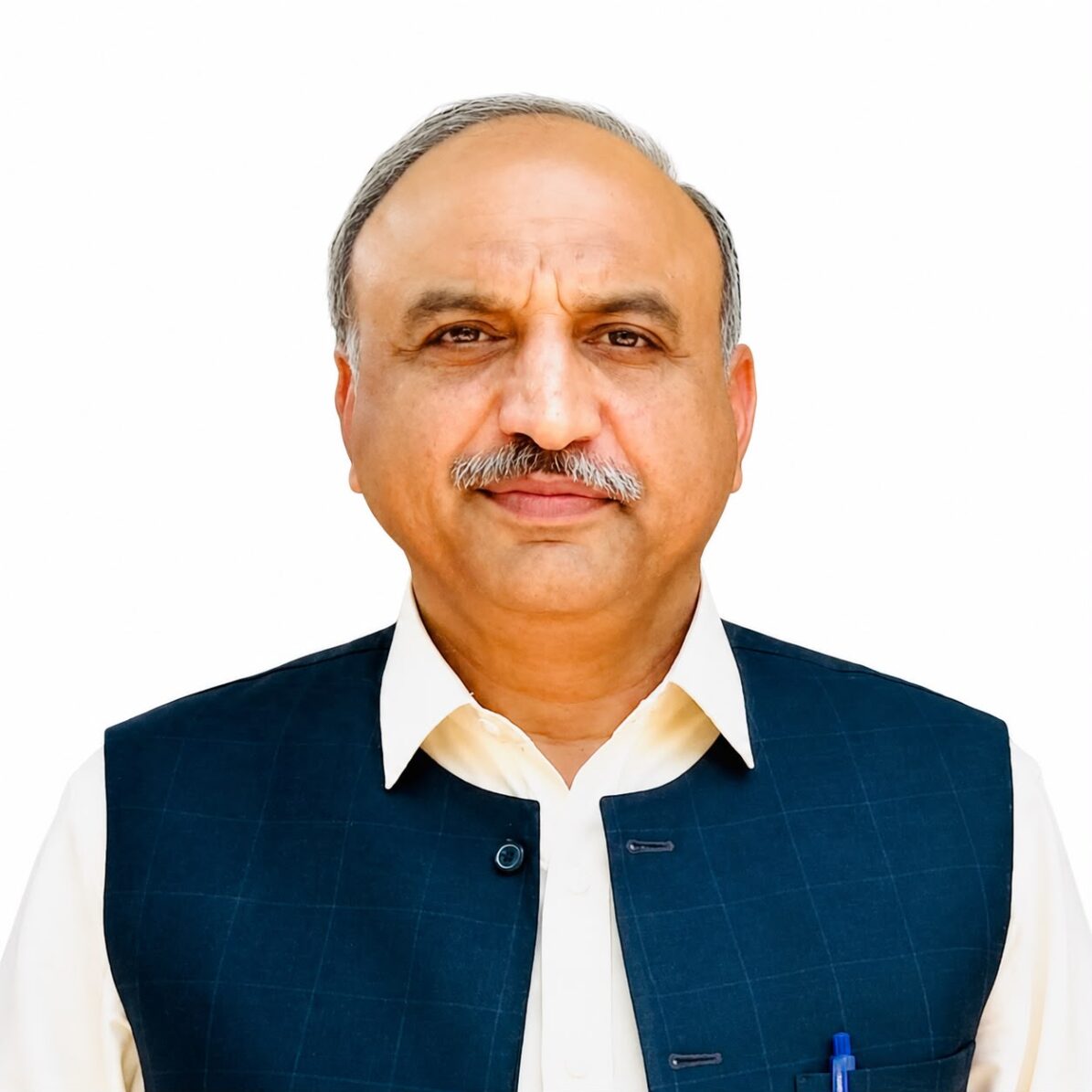
Muhammad Anwar is a development professional and CEO of Freedom Gate Prosperity, with over three decades of experience in governance, civic engagement and community development.
Leave a Reply