

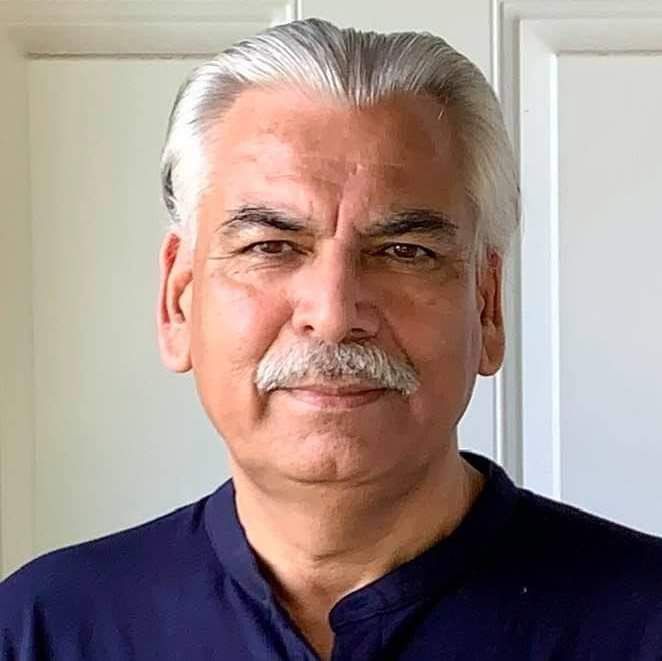
Barrister Usman Ali, Ph.D.
The passage of Pakistan’s 27th Constitutional Amendment was followed almost immediately by the dramatic resignation of two Supreme Court justices, Mansoor Ali Shah and Athar Minallah. Both declared the amendment a direct assault on judicial independence, the Constitution, and the structural unity of the Supreme Court. Justice Shah claimed the amendment had “fragmented” the Court and placed it under executive influence; Justice Minallah warned of grave and lasting damage to the rule of law.
Their stance, framed as a principled last stand, has sparked a national debate. Were these resignations truly an act of constitutional conscience or the culmination of long-standing frustrations, personal setbacks and political undercurrents within the judiciary?
Despite intense media focus, the resignations did not send shockwaves through the judicial or political system. Opposition parties hailed the judges; government officials dismissed the move as political theatre, arguing that both justices had been functioning as political actors for years. What the episode undeniably reveals is how deeply political alignments, subtle and overt, have penetrated Pakistan’s judiciary.
To understand this moment, one must revisit the country’s historical relationship between power and the courts. Over 75 years, Pakistan’s political order has been shaped not just by politicians and the military, but also by the judiciary, which has repeatedly rewritten the rules of the game. No democratic government has enjoyed uninterrupted institutional respect, and no military regime has brought lasting stability. Throughout, the public has remained a distant spectator.
The judiciary has played a decisive, often controversial, role in this imbalance. It validated military coups under the “Doctrine of Necessity,” endorsed Provisional Constitutional Orders, allowed the suspension of constitutions, and upheld decisions that dismantled elected governments. Prime Ministers were disqualified, removed, jailed, and even executed with judicial approval. The 1973 Constitution, Pakistan’s most important political covenant, was torn apart with legal justification, while its principal architect was hanged.
Over time, the judiciary transformed into an autonomous, unaccountable power centre. Courts expanded their reach through aggressive interpretations, sweeping suo motu powers, and decisions that at times amounted to informal constitutional amendments. In the past fifteen years, this judicial activism intensified, turning the courts into key players in political outcomes.
During Imran Khan’s rise, many analysts saw a clear alignment between certain judges and state institutions. The judiciary remained silent during the widespread irregularities surrounding the 2018 elections, yet moved with extraordinary speed against Khan’s opponents, delaying bail hearings, stretching trials, and shaping political narratives through judicial commentary.
After Khan’s ouster, the pendulum swung sharply. Some judges adopted an openly political tone, delivering remarks from the bench that resembled political speeches. New constitutional interpretations emerged, and certain judges appeared to position themselves within partisan battles. Their sudden outcry over the 2024 elections stood in stark contrast to their silence in 2018.
Within this broader landscape, Justices Mansoor Ali Shah and Athar Minallah remained central figures. For years, they cultivated an image of reformists and guardians of constitutional purity. Their speeches, letters and judicial reasoning amplified this identity. Yet significant personal and institutional factors cannot be ignored: the 26th Amendment blocked Justice Shah’s path to becoming Chief Justice, while Justice Minallah’s access to high-profile political cases and the public platform that came with them, was sharply curtailed. These shifts influenced their tone, positions, and public engagement.
Legal analysts widely speculated that both judges were waiting for a moment to redefine their legacy, to distance themselves from earlier, controversial decisions and recast themselves as defenders of principle. The 27th Amendment provided that opportunity. Whether this effort will succeed remains an open question.
For now, the resignations appear more symbolic than transformative. No constitutional crisis unfolded; no institutional collapse followed. Yet the episode lays bare a deeper and more uncomfortable truth: politics has long seeped into the judiciary, and few judges, past or present, have remained unaffected.
Pakistan’s real challenge is structural, not episodic. The judiciary must reclaim its constitutional boundaries, establish internal accountability, and detach itself from political alignments and institutional rivalries. Without such reform, resignations will remain symbolic gestures rather than catalysts for change.
In the end, one question lingers above all others:
If the judiciary had maintained constitutional neutrality over the decades, would Pakistan ever have needed the 26th or 27th Amendments? The judges who now claim that the Constitution has been “shattered” must also acknowledge the uncomfortable truth that their own decisions, alliances and contradictions helped create the very crisis they now protest.







Leave a Reply