

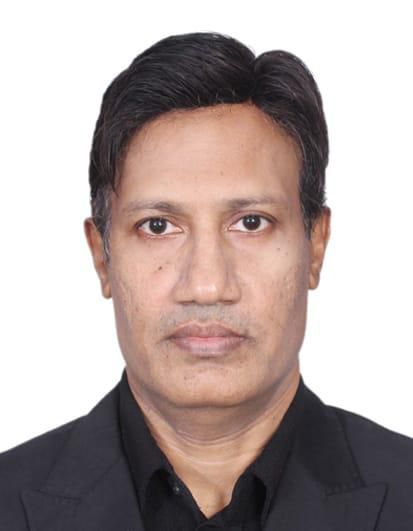
By Junaid Qaiser
At a moment when the United States and Iran hover between fragile ceasefire and renewed confrontation, an unlikely figure has stepped into the narrow space where diplomacy still breathes. Syed Asim Munir—Pakistan’s Chief of Army Staff and Chief of Defence Forces—has emerged not merely as a participant in regional diplomacy, but as a central node in efforts to prevent escalation. His role reflects a broader shift in Pakistan’s strategic posture: from observer to active mediator in one of the world’s most volatile rivalries.
Recent developments underline the seriousness of this engagement. Munir, accompanied by Interior Minister Mohsin Naqvi, concluded a three-day official visit to Tehran, a trip that was far from ceremonial. According to ISPR statements, the discussions focused on “bringing sustainable peace to the region,” with particular emphasis on the evolving security environment and the mechanics of ongoing diplomatic engagement. In practical terms, this meant aligning positions, restoring confidence, and exploring pathways that could keep dialogue alive between Washington and Tehran.
During the visit, Munir held high-level meetings with Masoud Pezeshkian, Mohammad Bagher Ghalibaf, and Abbas Araghchi, as well as senior military leadership including Major General Ali Abdollahi. These engagements formed part of a coordinated attempt to stabilize a situation that remains precarious despite a ceasefire brokered earlier this month. That truce, reached on April 8, is set to expire on April 22—its survival uncertain, its collapse potentially consequential.
Field Marshal’s message throughout these engagements has been consistent: dialogue over confrontation, de-escalation over brinkmanship. It is a stance that may sound predictable in diplomatic language but is far more difficult to operationalize in practice. The United States and Iran have spent decades entrenched in mutual suspicion. Rebuilding even limited trust requires intermediaries who can engage both sides without appearing partisan. Pakistan, under Munir’s stewardship, appears to have found that delicate balance.
This is not occurring in isolation. Prime Minister Shehbaz Sharif has simultaneously reinforced the diplomatic push, emphasizing that “full efforts” are underway to resolve outstanding issues. The alignment between civilian and military leadership signals a coordinated national strategy—one that treats mediation not as a symbolic gesture but as a sustained policy objective.

Pakistan’s hosting of direct US-Iran talks in Islamabad earlier this month was a defining moment in this process. While the Islamabad Talks did not yield a formal agreement, they achieved something arguably more important at this stage: continuity. Both sides left without a deal, but crucially, they did not walk away from the table. In high-stakes diplomacy, especially between adversaries with a history as fraught as this, keeping the channel open is itself a strategic success.
There is also a quieter dimension to Pakistan’s role—one that often goes unnoticed but carries weight in diplomatic circles. The decision to escort Iranian negotiators safely after the Islamabad talks was more than a logistical gesture; it was a signal of reliability. Trust in mediation is not built on declarations alone but on consistent, credible actions that reassure all parties involved.
Recognition of these efforts has begun to surface from Tehran. Interior Minister Eskender Momini has publicly acknowledged Pakistan’s role in achieving the ceasefire and facilitating reconciliation. Such acknowledgment matters. It strengthens Pakistan’s standing as a credible intermediary and reinforces the perception that its involvement is both constructive and welcomed. What Pakistan under the leadership of Asim Munir has achieved is something more foundational: the preservation of a diplomatic pathway at a time when it could easily have collapsed.
This is where the idea of a “Mediator-in-Chief” gains substance. Munir’s role is not about delivering a final agreement overnight; it is about managing the space in which an agreement might eventually become possible. It is about ensuring that escalation is delayed, that communication persists, and that opportunities for compromise are not extinguished by mistrust or miscalculation.
However, this strategy does come with its own risks. Mediation in a conflict of this scale puts Pakistan under various pressures and expectations. It requires skillfully navigating the sensitivities of both Washington and Tehran, along with the larger regional dynamics that influence their rivalry. Yet, it also opens up an opportunity—one that Pakistan seems ready to grab—to redefine its place in the international arena.
In a geopolitical landscape often dominated by louder powers and more visible actors, Pakistan’s approach has been notably understated. Yet its impact is increasingly difficult to ignore. By positioning itself at the center of a delicate diplomatic effort, and by entrusting that effort to a figure like Asim Munir, Pakistan has signaled that it intends to be more than a bystander in shaping regional stability.
Whether this effort culminates in a lasting agreement remains uncertain. But in a conflict where even temporary calm is hard-won, the ability to keep adversaries talking is no small achievement. For now, that may be the most important role any mediator can play—and it is one Pakistan, under Munir’s leadership, is quietly but decisively fulfilling.






Leave a Reply