

A Grand Celebration of History, Tradition and Sporting Excellence
Shakeel Ur Rehman
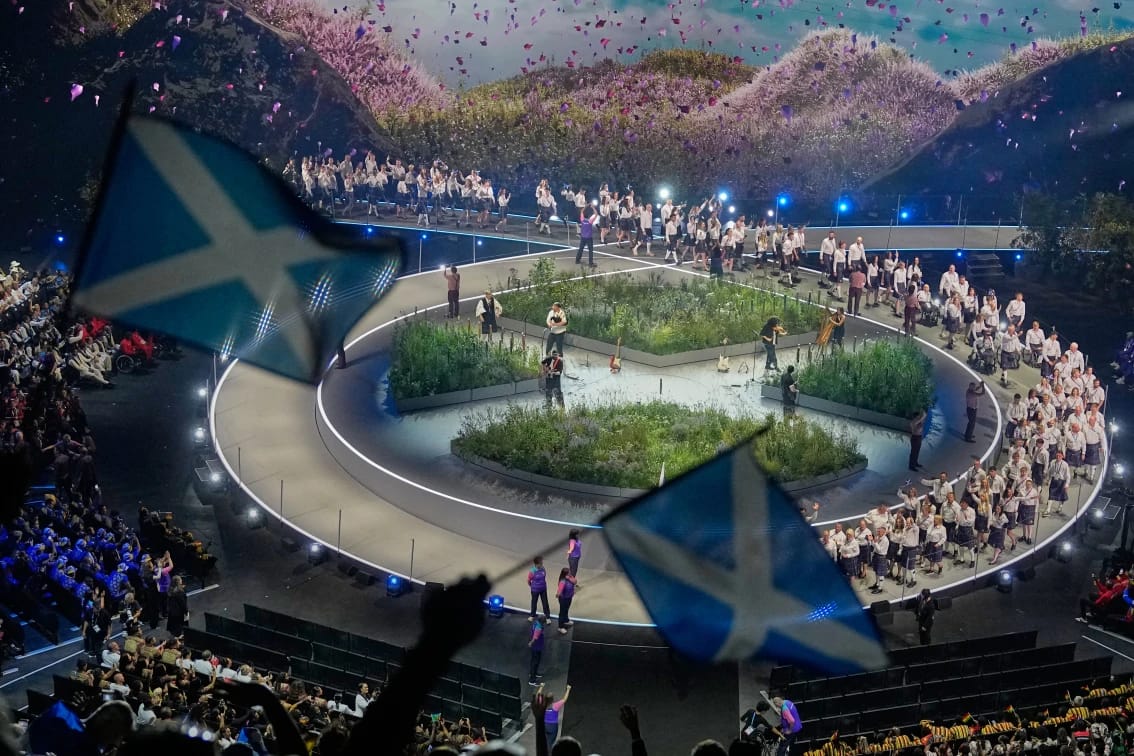
The 23rd Commonwealth Games officially got underway in Glasgow with a spectacular opening ceremony that celebrated Scotland’s rich heritage, cultural diversity and enduring sporting spirit. More than 3,000 athletes representing 74 Commonwealth nations and territories took part in the colourful event, witnessed by thousands of enthusiastic spectators from around the world.
The ceremony marked a historic first in Commonwealth Games history, as the opening celebrations were staged entirely inside the OVO Hydro Arena. Featuring dazzling light displays, state-of-the-art 3D visual effects, traditional Scottish bagpipe performances and vibrant cultural dances, the show blended centuries-old traditions with modern technology to create an unforgettable spectacle.
One of the evening’s most memorable moments came when King Charles III and Queen Camilla made a dramatic entrance inspired by the iconic British television series Doctor Who, arriving via the symbolic TARDIS. King Charles III then delivered the official Commonwealth message before declaring the Glasgow 2026 Commonwealth Games officially open to thunderous applause.


The traditional Parade of Nations followed, with athletes proudly carrying their national flags into the arena as spectators warmly welcomed every delegation. Performances by some of Scotland’s leading musicians and artists further enhanced the festive atmosphere, highlighting the country’s vibrant cultural identity.
The Commonwealth Games trace their origins back to 1930, when the inaugural British Empire Games were held in Hamilton, Canada. The event was later renamed the British Empire and Commonwealth Games, then the British Commonwealth Games, before adopting its current title, the Commonwealth Games, in 1978. Held every four years, the Games are widely regarded as one of the world’s most prestigious multi-sport events after the Olympic Games.


A Look at the Records
Australia remains the most successful nation in Commonwealth Games history, having won well over 1,000 gold medals and comfortably leading the all-time medals table. England ranks second, followed by Canada, while New Zealand, India and Scotland have also enjoyed remarkable success over the decades.
On the individual stage, Australian swimming legend Emma McKeon stands among the greatest athletes in Commonwealth Games history, having captured an unprecedented 14 gold medals. Numerous world champions and Olympic medallists have used the Commonwealth Games as a platform to launch or enhance their international careers.
Scotland has previously hosted the Games in Edinburgh in 1970 and 1986, and Glasgow in 2014. Glasgow 2026 marks the fourth time Scotland has welcomed the Commonwealth Games, underlining the nation’s reputation as one of the leading hosts of major international sporting events.


The 2026 edition also represents a remarkable organisational achievement. After Australia’s state of Victoria withdrew from hosting the Games, Scotland stepped in at short notice, delivering a streamlined and sustainable event by making maximum use of existing venues, reducing costs and promoting environmentally responsible planning.
The opening ceremony concluded with a spectacular display of fireworks, music and dazzling visual effects, accompanied by a powerful message of unity, friendship and peace—the core values of the Commonwealth movement.
Over the next eleven days, the world’s finest athletes will compete for glory across multiple sports, while fans eagerly await the possibility of new records being set and fresh sporting history being written at the Glasgow Commonwealth Games 2026.








Leave a Reply