

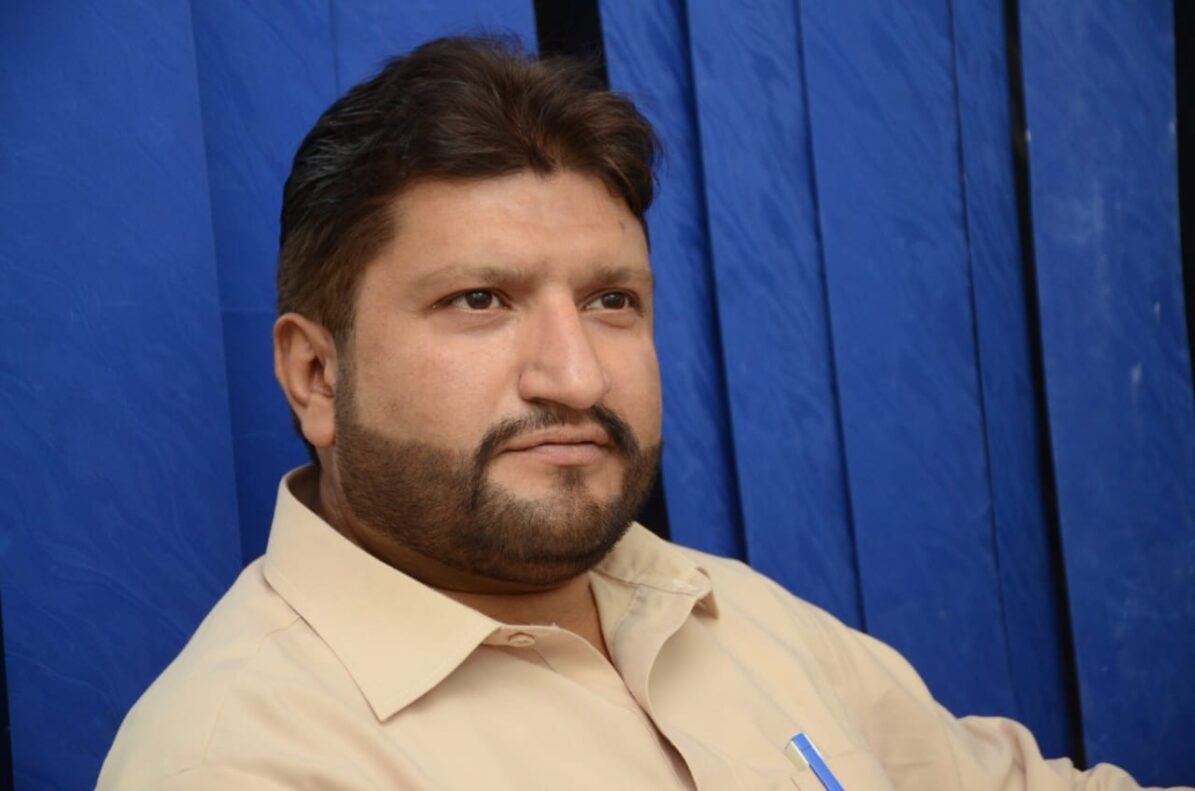
Amjad Hadi Yousafzai
Khyber Pakhtunkhwa’s politics has reached a stage where even a stadium can be turned into a parliamentary hall, and a parliament can sometimes resemble a stadium filled with noise and spectacle. The recent “historic” session held at the Peshawar Cricket Stadium was another episode in this ongoing trend—a political show where the stage was fully set, but the audience was largely missing.
This is the same venue that was previously known as Arbab Niaz Stadium, later renamed after former Prime Minister Imran Khan. Ironically, Imran Khan has been a strong critic of using stadiums for political gatherings and large public rallies. Yet now, his political party is holding similar gatherings at the same venue under slogans of “release,” a contradiction that critics describe as a clear departure from earlier principles.
The government’s stance was that the move aimed to “bring the assembly closer to the people,” but ground realities told a different story. Due to blocked access routes, strict security, and restricted entry, public participation remained minimal. Ironically, the same security arrangements that once disrupted PSL matches at this venue were now deployed for what was termed a “people’s assembly,” with thousands of police personnel assigned duties.
This raises a pressing question: if this was truly a public assembly, where were the people? And if it was not meant for the public, then who was it for? In an era where assembly proceedings can already be viewed live on electronic and social media, the necessity of such a large-scale physical gathering has itself become a subject of debate.
Opposition Leader and PPP leader Ahmed Karim Kundi strongly criticized the entire session, calling it a “circus,” and remarked sarcastically that it was a spectacle no one even came to watch. According to him, it was nothing more than unnecessary public expenditure and political display.
Political observers note that the province is already burdened with financial crises and debt, yet the government and Speaker Babar Saleem Swati continue to term it a “historic initiative.” Chief Minister Sohail Afridi also described it as a new chapter in democratic tradition, although ground realities present a different picture.
Reports suggest that the atmosphere during the session was also unusual. During Chief Minister Sohail Afridi’s speech, strong winds suddenly picked up, forcing him to leave before completing his address. Meanwhile, reports also emerged of a large screen collapsing, raising further questions about administrative preparedness. Workers also reportedly complained about being brought in and left in disorganized conditions.
Tensions were further heightened due to alleged misbehavior and altercations with journalists; however, the situation was later brought under control through the intervention of Senior Minister Mina Khan Afridi and Special Assistant on Information Shafi Jan.
Thus, the “historic session” on one hand was presented by the government as a milestone in democratic practice, while on the other hand it was viewed by the opposition as an expensive political spectacle. And in the entire scene, perhaps the most visible absence was that of the public—an absence that left a major question mark over every claim of “historic achievement.”








Leave a Reply